The Laws of Inertia in a World where there are Titans
Hollywood does a remarkable job of telling amazing and unbelievable stories and making them real for us. We sit in darkened theaters for sometimes upwards to over 3 hours, lost and immersed in worlds where the impossible become possible. We've long had an infatuation with the idea of giant robots, whether they are invading aliens, dueling giants or the saviors of our world. And ever since the first giant robots graced the pages of comic books (manga) in Japan during the beginning of the boom of their technology, we've been willing to believe that such titans could be reality. It’s easy to accept the idea of giant robots mainly due to the fact that we want these behemoths to be part of our future, however there are glaring physical problems with their existence. The sheer mass and inertial energy of giant robots are never truly portrayed accurately in animations and movies.
Fig. 1

What studios never take into account and what make the existence of a Pacific Rim sized robot impossible is the square cube law. When one is calculating the area of a surface, say a square, you multiply the length with the width, or you square it. Now take those same dimensions and apply it to a cube and try and get the volume of it; length times width times height, or cubed. The square cube law simply states that as something grows in size, the volume increases at a much greater rate than its surface area. The square cube law has ramifications with both biological and mechanical constructs. It's why animals never got to be larger than the dinosaurs and the most massive of creatures live in the ocean where buoyancy can help negate the pull of earth's gravity. As a creature grows in size, the supports required to hold its weight needs to increase as well. Take for example a mouse and an elephant and compare their leg structure. The elephant requires thick trunk like legs to support its girth versus a mouse only needs spindly thin ones. If you were to expand a mouse to the size of an elephant, it would break its legs instantly as soon as it tried to stand. Can you imagine what a being of several magnitudes greater than an elephant would require?
But let’s say scientists developed an alloy or some sort of material strong enough to support the sheer mass of a giant robot, two elements on how they are portrayed in movies are quite unbelievable. Firstly, they usually move fairly quickly… some are actually quite agile. And secondly, their impact upon the environment are never as destructive as they should be. A Pacific Rim sized robot cavorting about a metropolis would be absolutely catastrophic. Some examples of this are below.
Tetsujin 28:

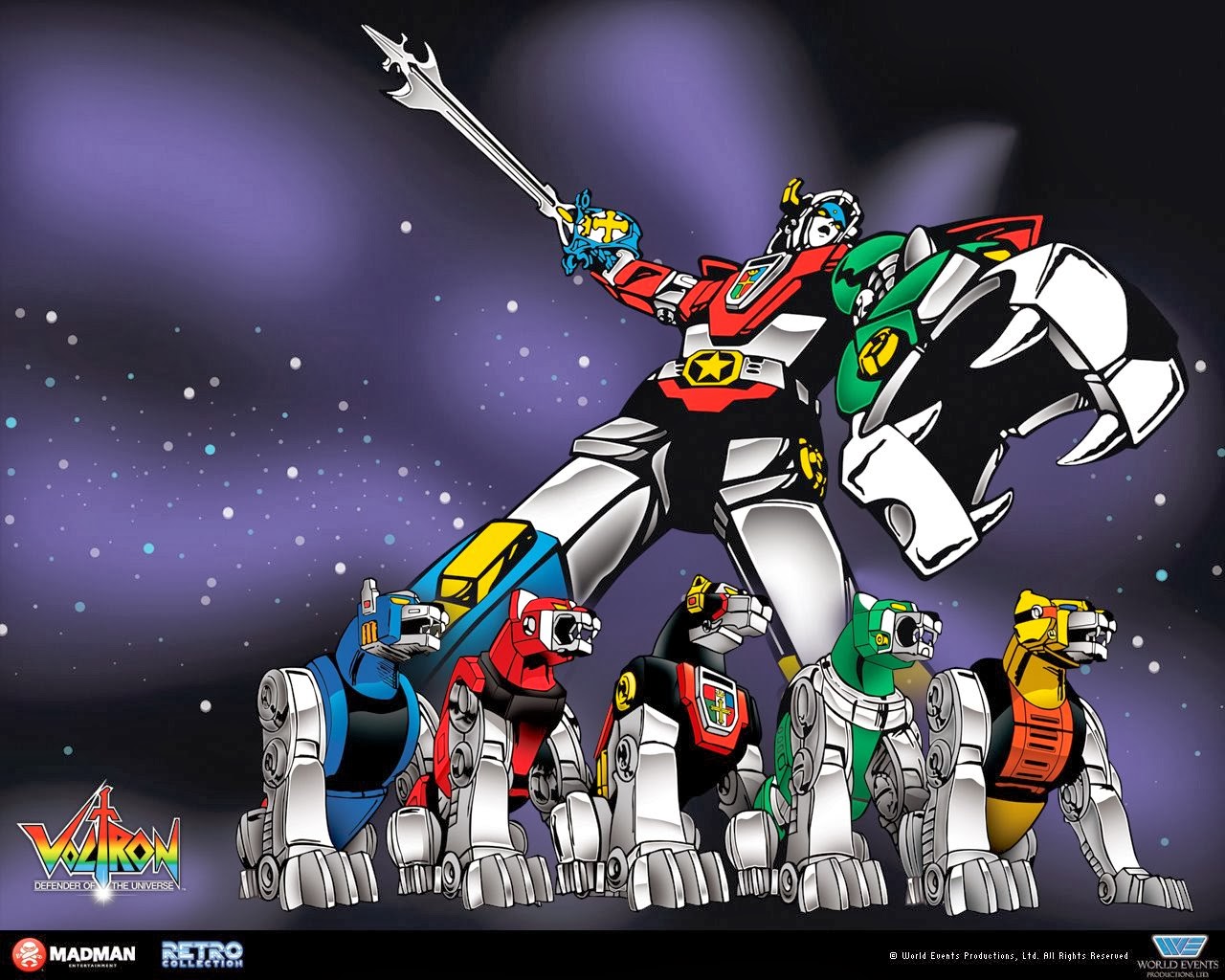
Giant robots first appeared in Japan in the 1950’s; the very first manga to feature one was printed in 1956 called “Tetsujin 28.” It was made into an anime series and made its way to America in the sixties under the name “Gigantor.” From there it spawned an endless amount of animes and cartoons based on giant robots. One of the first mainstream American cartoons to feature giant robots and definitely one of the most iconic is “Voltron”, which featured 5 robotic lions that combined to form a huge humanoid robot. Their mission was to defend earth against alien invaders. The protagonist robot, Voltron is massive, standing 197 feet tall according to the attached chart (fig. 1). That’s about 2/3’s the height of the Statue of Liberty. In the show, Voltron is able to dodge, roll and leap like an Olympic gymnast. Something so massive cannot move that quickly. Going back to the mouse versus elephant comparison; a mouse can move quickly because it has very little mass to move. An elephant however, though extremely strong and powerful, still cannot move like a mouse. It has too much bulk to first, get going quickly and also to stop or change directions in any sort of rapid manner. That and the blazing sword Voltron conjures out of nothingness is simply preposterous. But extremely cool!
Voltron and the five lions:

The extremely popular franchise, Hasbro/Takara’s Transformers, shared its humble beginnings with Voltron as a cartoon in the 80’s. An animation is far easier to suspend one's disbelief in terms of giant machines moving among us but Transformers made the leap from after school cartoons to the live action big screen in 2007. They're of a much more manageable mass than Voltron, being the size of cars and trucks but in the movie they continue to move like much lighter beings, agile and quick. We already addressed how something so large cannot move that fast, but these are aliens with much more advanced technology right? Perhaps they are just inordinately strong and adapted to move their bulk in the manner portrayed in the movie. That aside, what was unbelievable in the movie was the amount of damage they caused as these titans moved among us. In the final battle within a city, the transformers leap and dodge on and off buildings doing minimal damage as they use them as giant jungle gyms. The Transformers were able to make huge leaps and were hurled into buildings with tremendous force, yet they simply bounced off of most structures. There is one scene in particular where Optimus Prime takes a direct blast from Megatron and he flies what appears to be 2-3 blocks before crashing into the side of a building. Instead of going through the building like he realistically should’ve, he instead shattered some windows and slid down the side, also somehow missing all the pedestrians underfoot. This was a trend throughout the movie, with the Transformers’ physical mass coupled with their inertial energy, never really being portrayed realistically.
Transformers G1 mural:
.jpg)
Finally, in 2013, the most egregious slight against the believability of giant robots, the movie Pacific Rim made its debut, taking the idea of giant robots vs giant monsters to an amazing new level. The Jaegers are even more massive than Voltron and fight monsters as large or even bigger in an attempt to defend our world. The Jaegers are unbelievable for all the reasons stated above but also for this one slightly comical element. We see these titans battle in cities and though they accurately do tremendous damage to the surrounding buildings, they should not even be able to stand on the streets they are running on. Gipsy Danger, the hero jaeger in Pacific Rim would, according to the chart, weigh over 12 million pounds and stands as tall as skyscrapers. Modern buildings require a massive foundation on which to stand, and their weigh is distributed evenly over it. Gipsy Danger has two legs, which are small focal points on which all that weight is centered on and become even more focused when he starts to walk, placing all that weight on one foot. In real world earth gravity, Gipsy Danger would literally sink into the pavement as if it were quicksand.
Pacific Rim poster:

Unfortunately for the giant robot fanboy or girl in all of us, these metal monsters almost certainly can never exist on this world under the ruling of Earth’s gravity. They are just too big to move the way they do in our minds; some are too big to even stand up lest they crumple under their own weight. Perhaps in the future, on other worlds where the pull of gravity is greatly lessened or to shield us from the crushing pressure of the depths of the ocean where we can use water’s natural buoyancy to support their bulk. For now though, they’ll have to continue to exist on screen and in our imaginations.
Resources:
http://www.technewsdaily.com/18529-giant-robots-possible-pacific-rim.html
http://io9.com/5925549/could-we-actually-build-a-robot-the-size-of-pacific-rims-massive-jaegers
http://movieline.com/2013/01/09/pacific-rim-vs-real-world-physics-giant-robots-guillermo-del-toro/
http://www.bleedingcool.com/2013/07/15/your-brief-history-of-giant-robots-adi-tantimedhs-look-it-moves/
Fig. 1

What studios never take into account and what make the existence of a Pacific Rim sized robot impossible is the square cube law. When one is calculating the area of a surface, say a square, you multiply the length with the width, or you square it. Now take those same dimensions and apply it to a cube and try and get the volume of it; length times width times height, or cubed. The square cube law simply states that as something grows in size, the volume increases at a much greater rate than its surface area. The square cube law has ramifications with both biological and mechanical constructs. It's why animals never got to be larger than the dinosaurs and the most massive of creatures live in the ocean where buoyancy can help negate the pull of earth's gravity. As a creature grows in size, the supports required to hold its weight needs to increase as well. Take for example a mouse and an elephant and compare their leg structure. The elephant requires thick trunk like legs to support its girth versus a mouse only needs spindly thin ones. If you were to expand a mouse to the size of an elephant, it would break its legs instantly as soon as it tried to stand. Can you imagine what a being of several magnitudes greater than an elephant would require?
But let’s say scientists developed an alloy or some sort of material strong enough to support the sheer mass of a giant robot, two elements on how they are portrayed in movies are quite unbelievable. Firstly, they usually move fairly quickly… some are actually quite agile. And secondly, their impact upon the environment are never as destructive as they should be. A Pacific Rim sized robot cavorting about a metropolis would be absolutely catastrophic. Some examples of this are below.
Tetsujin 28:

Giant robots first appeared in Japan in the 1950’s; the very first manga to feature one was printed in 1956 called “Tetsujin 28.” It was made into an anime series and made its way to America in the sixties under the name “Gigantor.” From there it spawned an endless amount of animes and cartoons based on giant robots. One of the first mainstream American cartoons to feature giant robots and definitely one of the most iconic is “Voltron”, which featured 5 robotic lions that combined to form a huge humanoid robot. Their mission was to defend earth against alien invaders. The protagonist robot, Voltron is massive, standing 197 feet tall according to the attached chart (fig. 1). That’s about 2/3’s the height of the Statue of Liberty. In the show, Voltron is able to dodge, roll and leap like an Olympic gymnast. Something so massive cannot move that quickly. Going back to the mouse versus elephant comparison; a mouse can move quickly because it has very little mass to move. An elephant however, though extremely strong and powerful, still cannot move like a mouse. It has too much bulk to first, get going quickly and also to stop or change directions in any sort of rapid manner. That and the blazing sword Voltron conjures out of nothingness is simply preposterous. But extremely cool!
Voltron and the five lions:
The extremely popular franchise, Hasbro/Takara’s Transformers, shared its humble beginnings with Voltron as a cartoon in the 80’s. An animation is far easier to suspend one's disbelief in terms of giant machines moving among us but Transformers made the leap from after school cartoons to the live action big screen in 2007. They're of a much more manageable mass than Voltron, being the size of cars and trucks but in the movie they continue to move like much lighter beings, agile and quick. We already addressed how something so large cannot move that fast, but these are aliens with much more advanced technology right? Perhaps they are just inordinately strong and adapted to move their bulk in the manner portrayed in the movie. That aside, what was unbelievable in the movie was the amount of damage they caused as these titans moved among us. In the final battle within a city, the transformers leap and dodge on and off buildings doing minimal damage as they use them as giant jungle gyms. The Transformers were able to make huge leaps and were hurled into buildings with tremendous force, yet they simply bounced off of most structures. There is one scene in particular where Optimus Prime takes a direct blast from Megatron and he flies what appears to be 2-3 blocks before crashing into the side of a building. Instead of going through the building like he realistically should’ve, he instead shattered some windows and slid down the side, also somehow missing all the pedestrians underfoot. This was a trend throughout the movie, with the Transformers’ physical mass coupled with their inertial energy, never really being portrayed realistically.
Transformers G1 mural:
.jpg)
Finally, in 2013, the most egregious slight against the believability of giant robots, the movie Pacific Rim made its debut, taking the idea of giant robots vs giant monsters to an amazing new level. The Jaegers are even more massive than Voltron and fight monsters as large or even bigger in an attempt to defend our world. The Jaegers are unbelievable for all the reasons stated above but also for this one slightly comical element. We see these titans battle in cities and though they accurately do tremendous damage to the surrounding buildings, they should not even be able to stand on the streets they are running on. Gipsy Danger, the hero jaeger in Pacific Rim would, according to the chart, weigh over 12 million pounds and stands as tall as skyscrapers. Modern buildings require a massive foundation on which to stand, and their weigh is distributed evenly over it. Gipsy Danger has two legs, which are small focal points on which all that weight is centered on and become even more focused when he starts to walk, placing all that weight on one foot. In real world earth gravity, Gipsy Danger would literally sink into the pavement as if it were quicksand.
Pacific Rim poster:

Unfortunately for the giant robot fanboy or girl in all of us, these metal monsters almost certainly can never exist on this world under the ruling of Earth’s gravity. They are just too big to move the way they do in our minds; some are too big to even stand up lest they crumple under their own weight. Perhaps in the future, on other worlds where the pull of gravity is greatly lessened or to shield us from the crushing pressure of the depths of the ocean where we can use water’s natural buoyancy to support their bulk. For now though, they’ll have to continue to exist on screen and in our imaginations.
Resources:
http://www.technewsdaily.com/18529-giant-robots-possible-pacific-rim.html
http://io9.com/5925549/could-we-actually-build-a-robot-the-size-of-pacific-rims-massive-jaegers
http://movieline.com/2013/01/09/pacific-rim-vs-real-world-physics-giant-robots-guillermo-del-toro/
http://www.bleedingcool.com/2013/07/15/your-brief-history-of-giant-robots-adi-tantimedhs-look-it-moves/